 Tri-Cities Staining
Tri-Cities Staining
Tri-Cities Staining
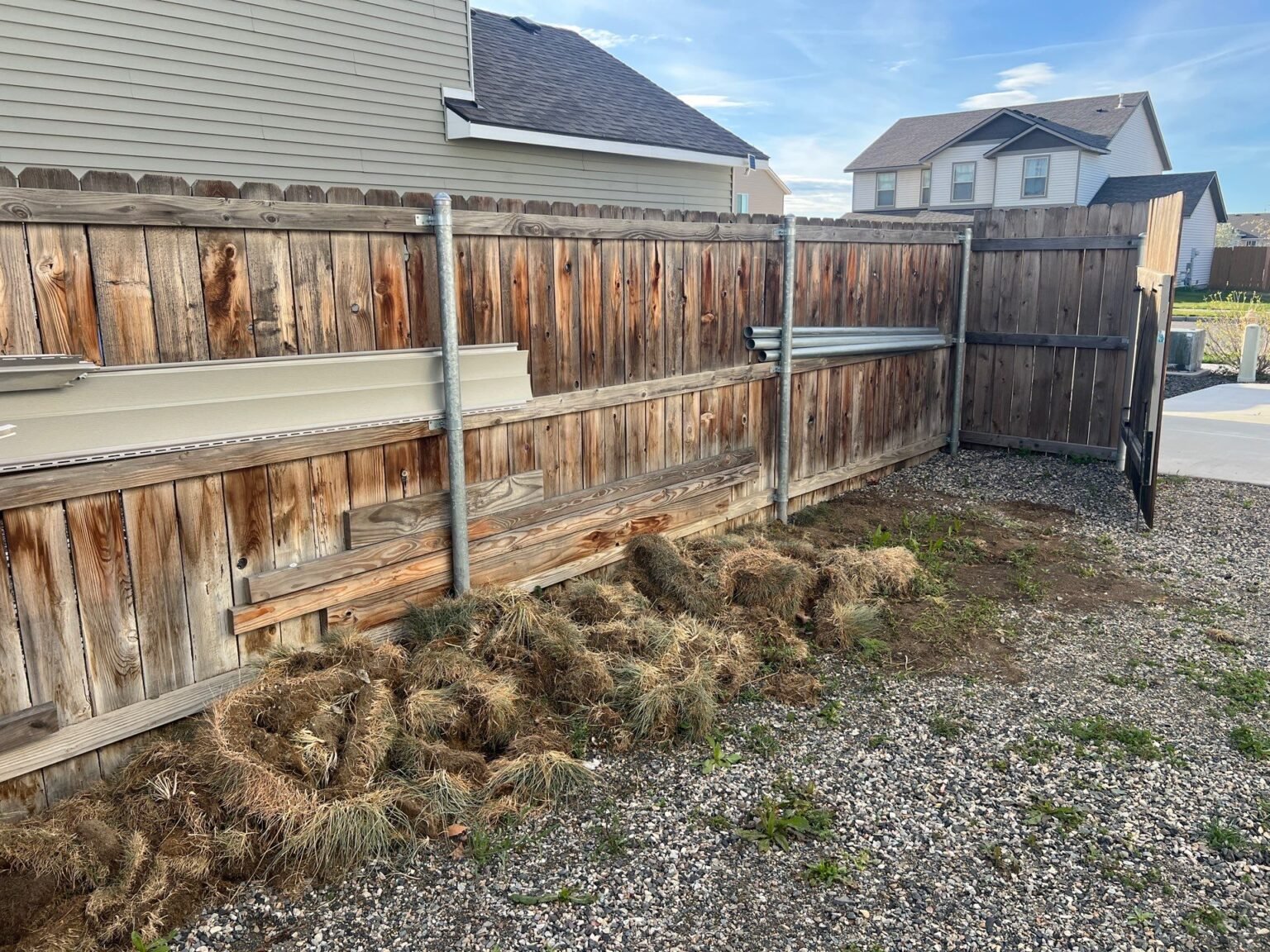
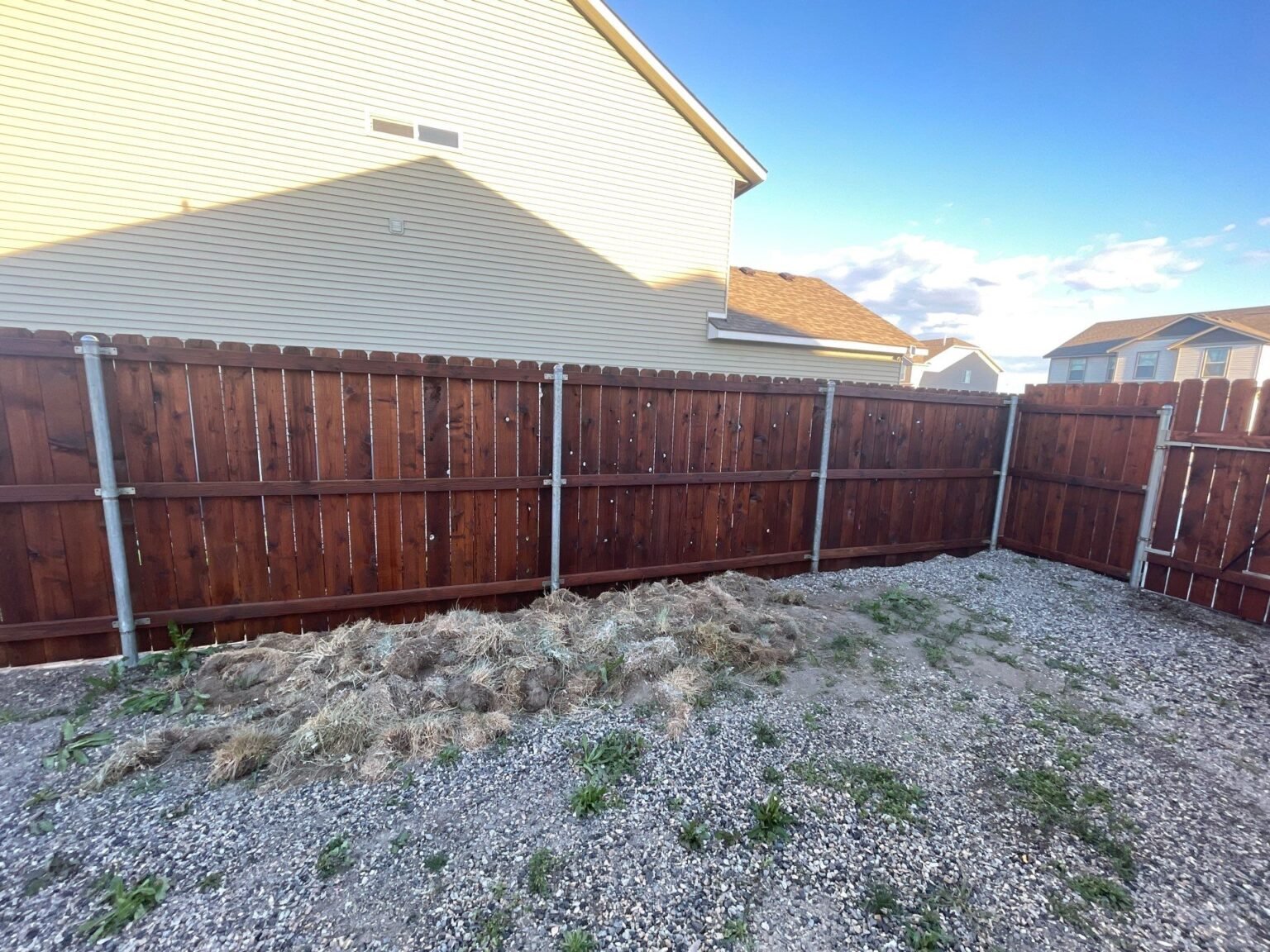
Most fences in the Tri-Cities that look finished aren’t. Grey boards, faded stain, peeling film, even old paint — nearly all of it comes back, for a fraction of what a new fence costs.
See what yours would cost to restoreFence installers quote by the foot. So do we. Here’s how the two compare for a typical backyard fence in Kennewick, Richland or Pasco.
New cedar, new posts, tear-out and haul-away. And it still needs to be stained, or it starts greying the first summer.
Clean or strip, brighten, replace any bad boards, sand, and stain with a penetrating oil that soaks in instead of peeling. Stain is included.
Replacement figures are typical Tri-Cities installer quotes for cedar privacy fence with tear-out. Every fence is different, which is why the estimate is free and in person.
We tell people the truth on the first visit, including when a fence is past saving. It’s rarer than you’d think. Here’s the line we use:
Cedar turns silver in about two summers of Tri-Cities sun. The wood underneath is usually fine.
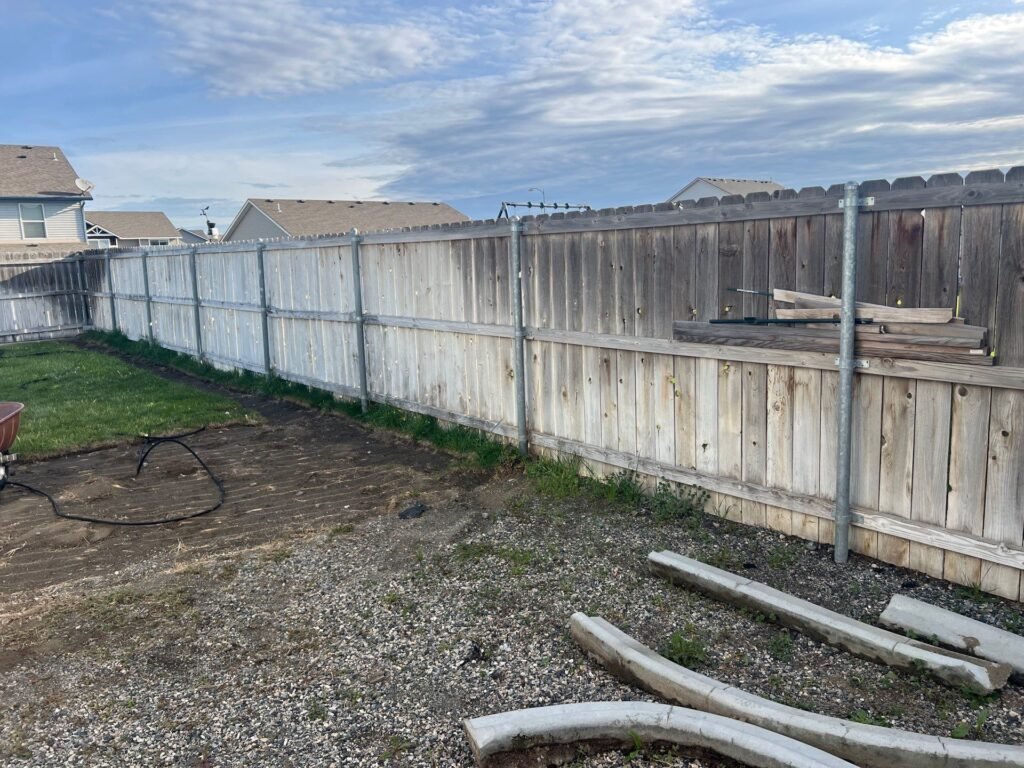
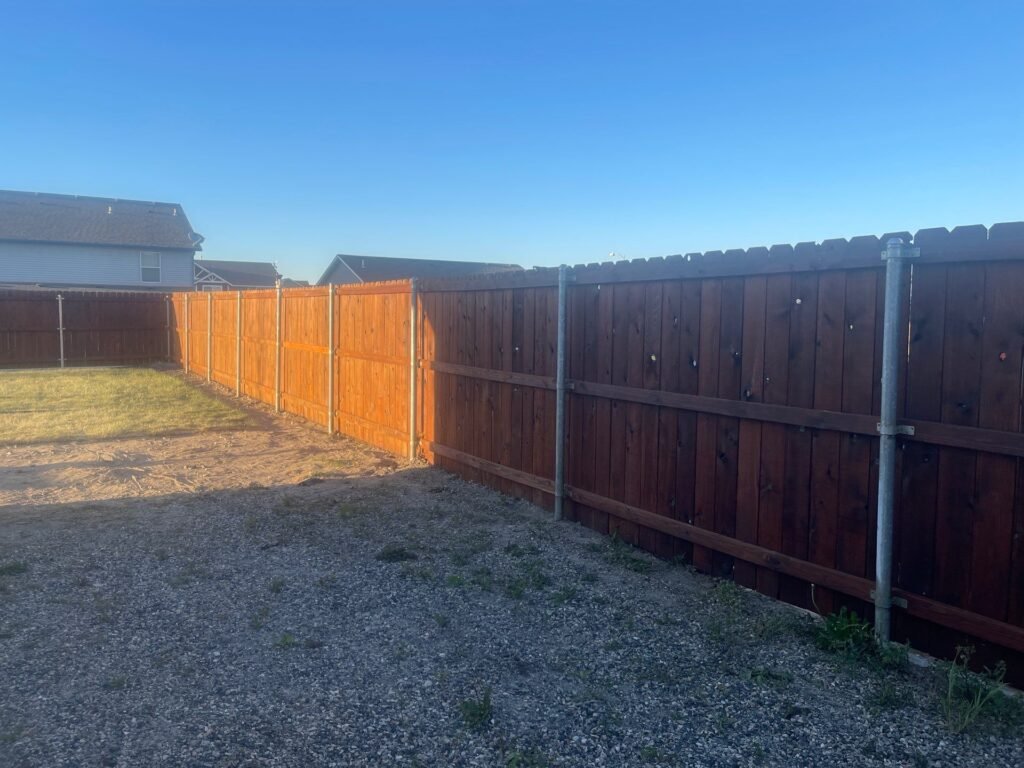
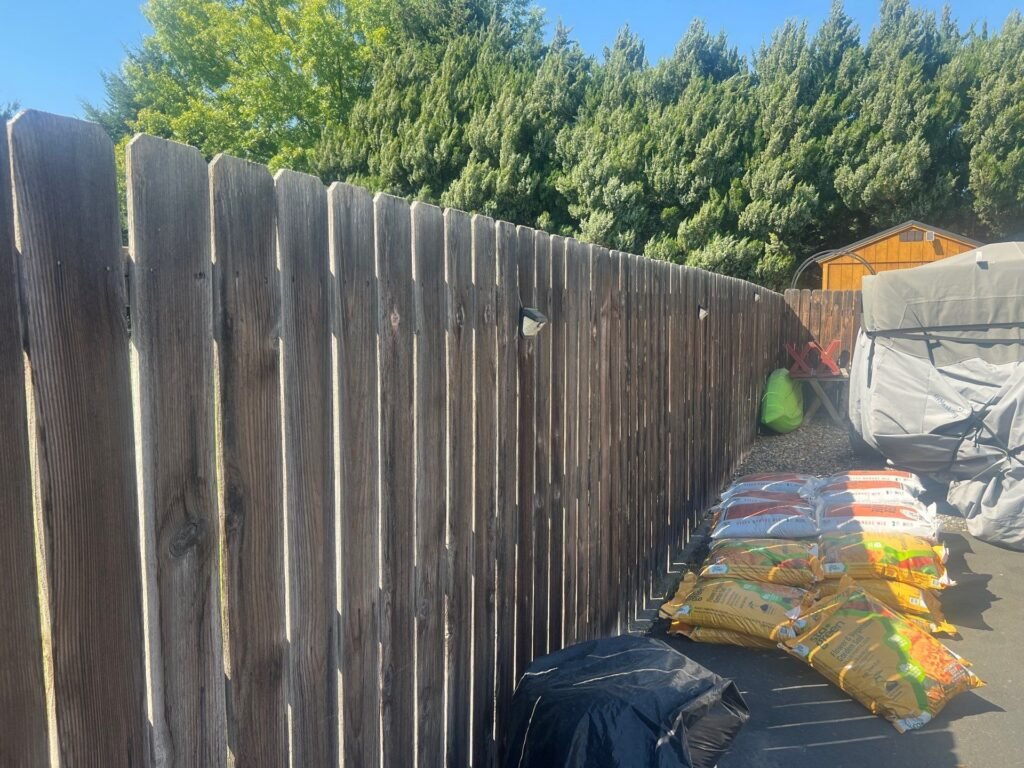
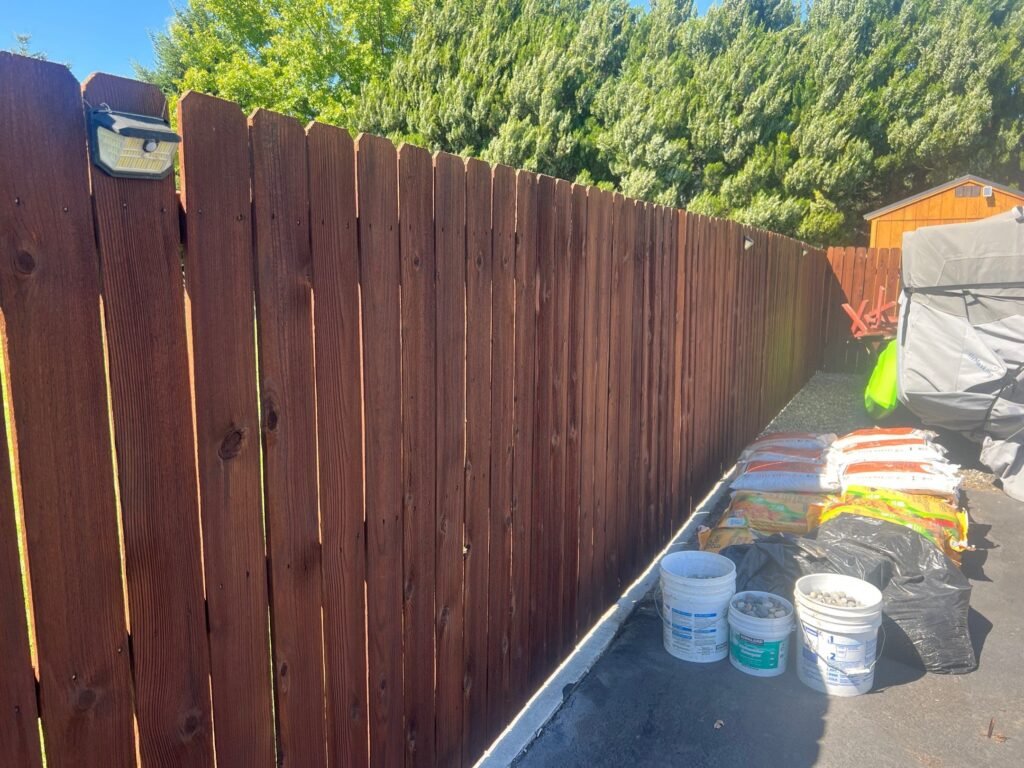
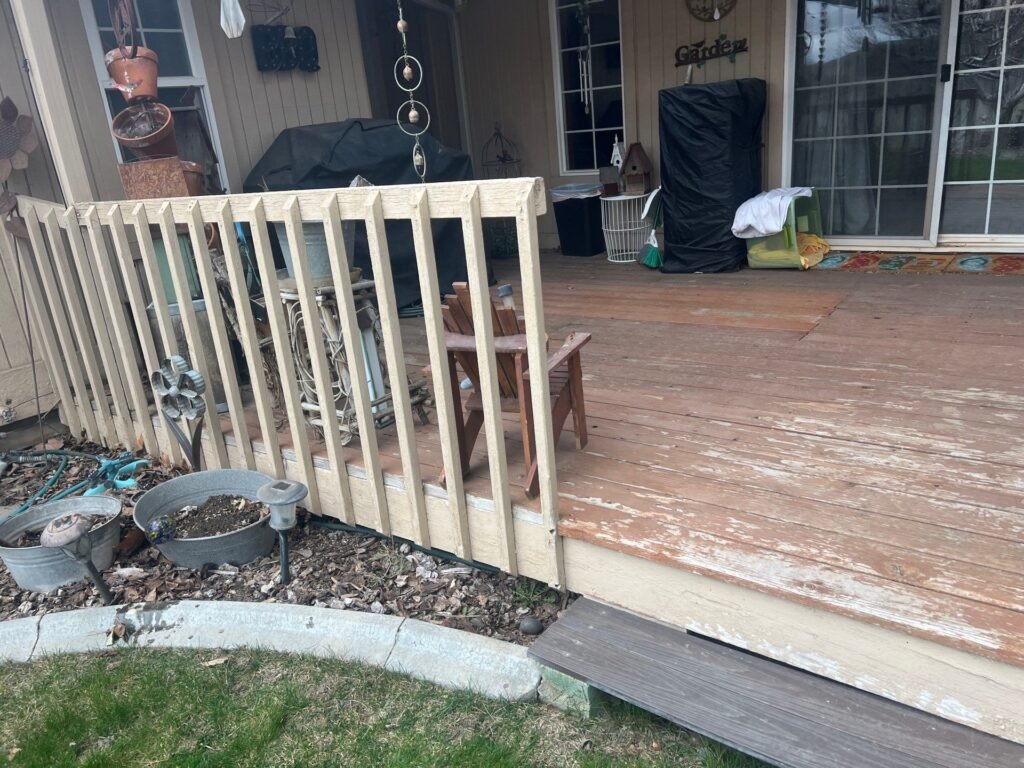
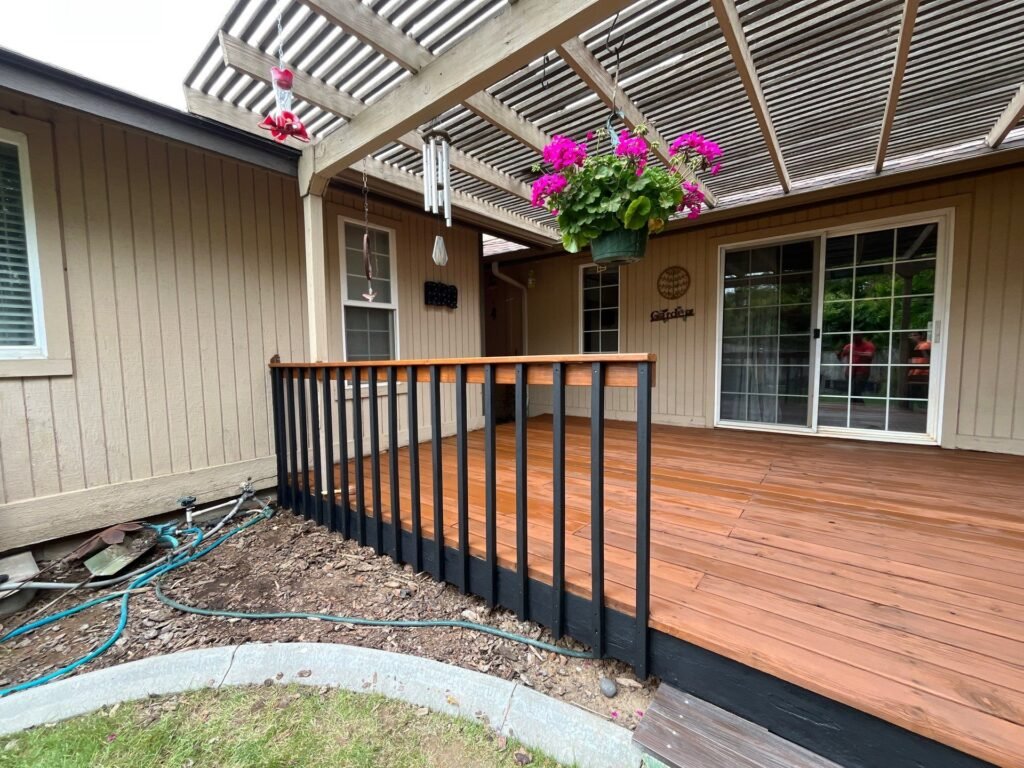
A penetrating stain that’s worn thin doesn’t need stripping. It needs cleaning and a fresh coat that soaks into the same wood.
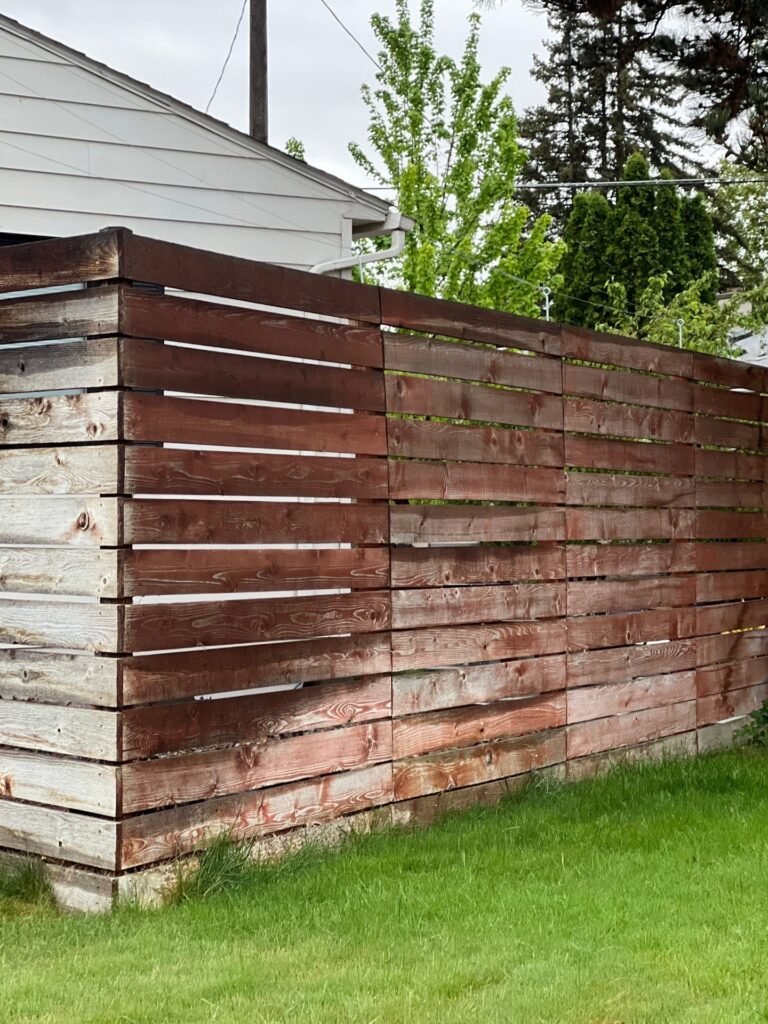
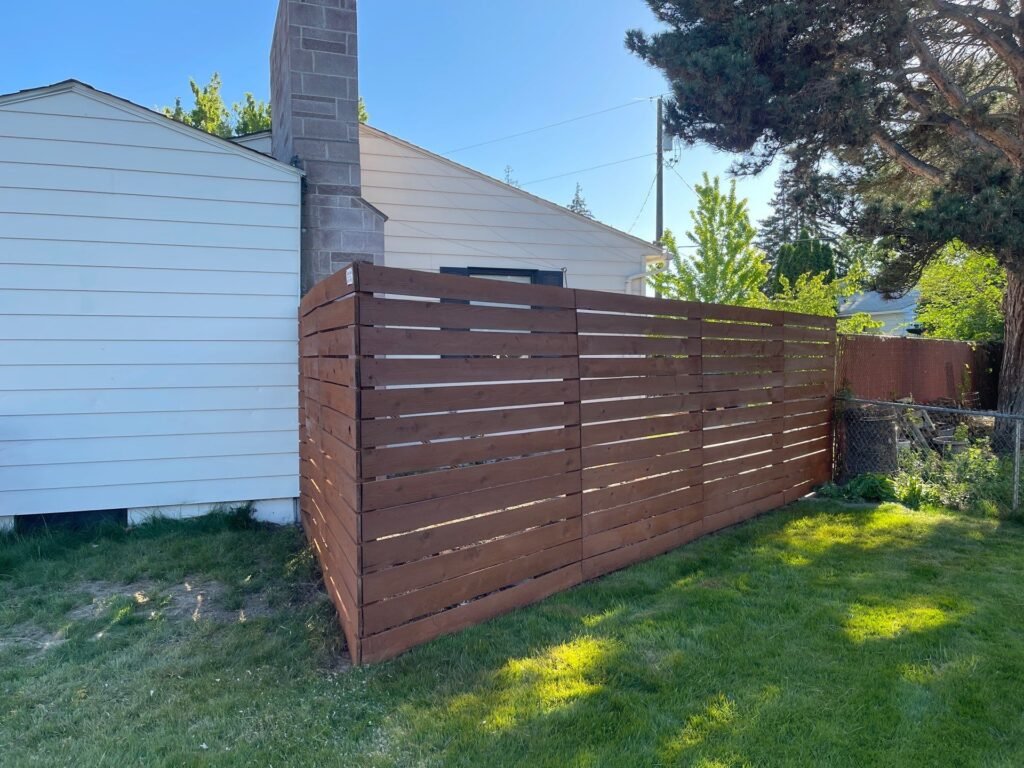
Film-forming stains and paint sit on top of the wood instead of soaking in, and eventually they flake. It’s the look that convinces most people to replace. We chemically lift the film with a hydroxide stripper, pressure wash it off, neutralize and brighten with oxalic acid, then finish with a penetrating stain that can’t peel because there’s nothing on the surface to peel. A painted fence can go back to stained wood the same way, or be cleaned and re-coated in a solid-color stain if you like the color.
Most fences take two to three days. You don’t need to be home, and your yard is left the way we found it. Every job is photographed at each stage, so you can see exactly what was done.
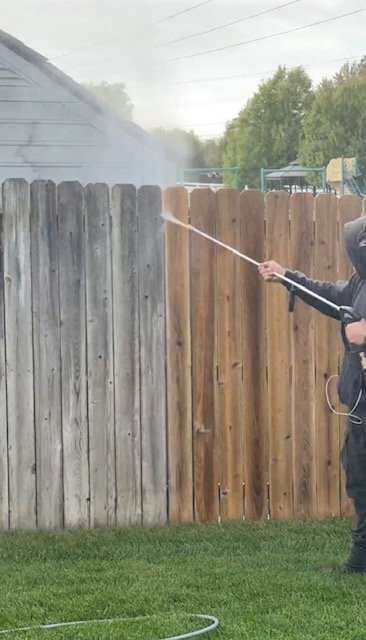
Our two-step restorative clean. A restorative cleaner lifts the grey, dirt and mildew, then an oxalic acid brightener neutralizes it and brings the wood’s natural color back. Grey fences usually start and end here.
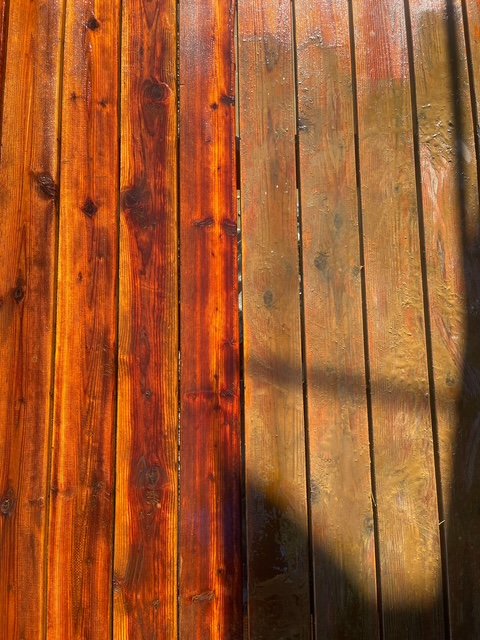
When there’s a film-forming stain or paint on the wood, a hydroxide stripper dissolves it so it rinses off with the pressure washer. This is a stubborn old coating halfway through: dark where the stripper is working, bare where it’s done.
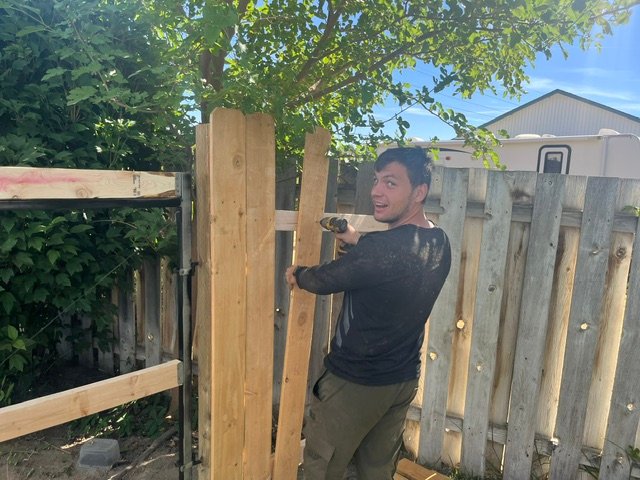
Rotten or split boards get replaced, loose ones re-fastened, screws sunk and nails set. Because the whole fence is stained afterward, the new wood blends in instead of standing out.
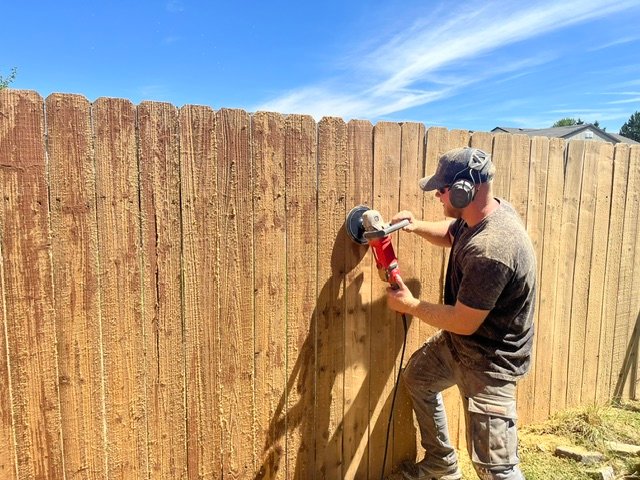
An Osborn nylon oscillating cup brush at 80 grit buffs off any coating that survived two stripping passes and smooths rails, caps and deck boards. The wood has to be fully dry first.
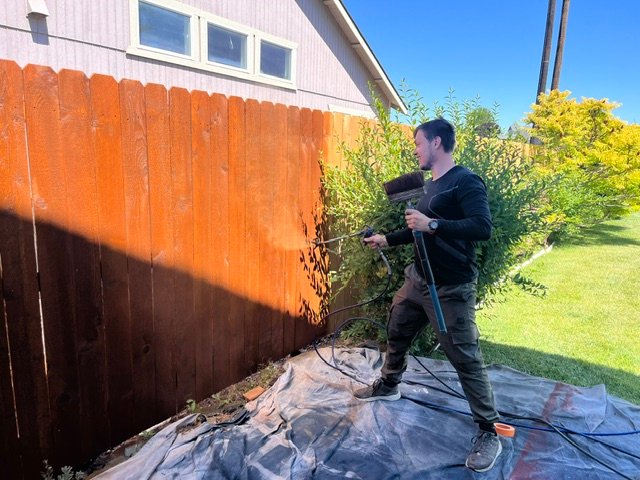
We spray a penetrating oil stain from Wood Defender or Expert Stain & Seal, then back-brush every board so it works into the wood instead of sitting on top. Even coverage, maximum penetration, no lap marks, and nothing to peel later.
Free, in person, usually within the week. If your fence really is past saving, we’ll tell you, and you’ve lost nothing but a few minutes.
Request a free estimateOr call or text (541) 561-8138. A photo of your fence is enough to start.
Almost always. Grey is the surface of the wood oxidizing in the sun, not rot. Our two-step cleaning removes the grey layer and a brightener restores the natural color underneath. If the boards are solid, the fence is a candidate.
A penetrating oil stain typically goes three to five years on a fence before it wants a maintenance coat, depending on sun exposure. Maintenance is a clean and re-coat, not a strip, so it costs a fraction of the first restoration.
No. We replace the bad boards and stain the whole fence so the new wood matches. It’s only “replace the fence” when the posts are gone.
Yes. We can strip it back to stained wood or clean it and re-coat in a solid-color stain, which holds up better than paint on exterior wood.
Restoration is priced per linear foot per side and runs a fraction of a new fence, which in the Tri-Cities is typically $60 to $70 per foot installed with tear-out, before staining. The estimate is free and specific to your fence.
Yes. Same process, same stains. Decks get screws sunk and boards sanded before staining.